La Vie en Couture: Recounting Whitehouse’s trip to Paris Haute Couture Week
...through the eyes of Fashion Design student Benjamin Rando.
For Whitehouse Institute of Design Fashion Design student Benjamin Rando, a trip to Paris during Haute Couture Week offered the opportunity to experience fashion from an entirely new perspective.
Arriving in Paris on 3 July after travelling via Shanghai, Benjamin settled into the city’s 8th arrondissement, surrounded almost immediately by the fashion houses, ateliers, museums and streets he had only previously encountered through his studies.
With the Parisian summer sun rising around 4am, there was plenty of time to explore the city and all its glamour.
A fashion education beyond the classroom
Benjamin spent a few days getting acquainted with the city.
A walk around Place Vendôme and the Ritz took him past Chanel’s ateliers and a nearby patisserie, while the monumental camellia chandelier inside Chanel offered an early reminder that, in Paris, fashion rarely exists in isolation. Architecture, art, interiors, food, history and clothing constantly overlap!
That relationship continued inside the city’s museums and galleries. At the Musée des Arts Décoratifs, beside the Louvre, Benjamin encountered historic and contemporary fashion and decorative arts, including Balmain pieces and an exhibition exploring the style of Queen Sirikit of Thailand.
Visits to the Palais Galliera offered the opportunity to examine intricate embroidery and construction at a proximity photography rarely allows.
“Just to see their work up close was extraordinary.”
There were stops at Fondation Cartier, the Louvre and Galeries Lafayette too, alongside exhibitions dedicated to artists including Henri Matisse.
All of this before the real action even began!
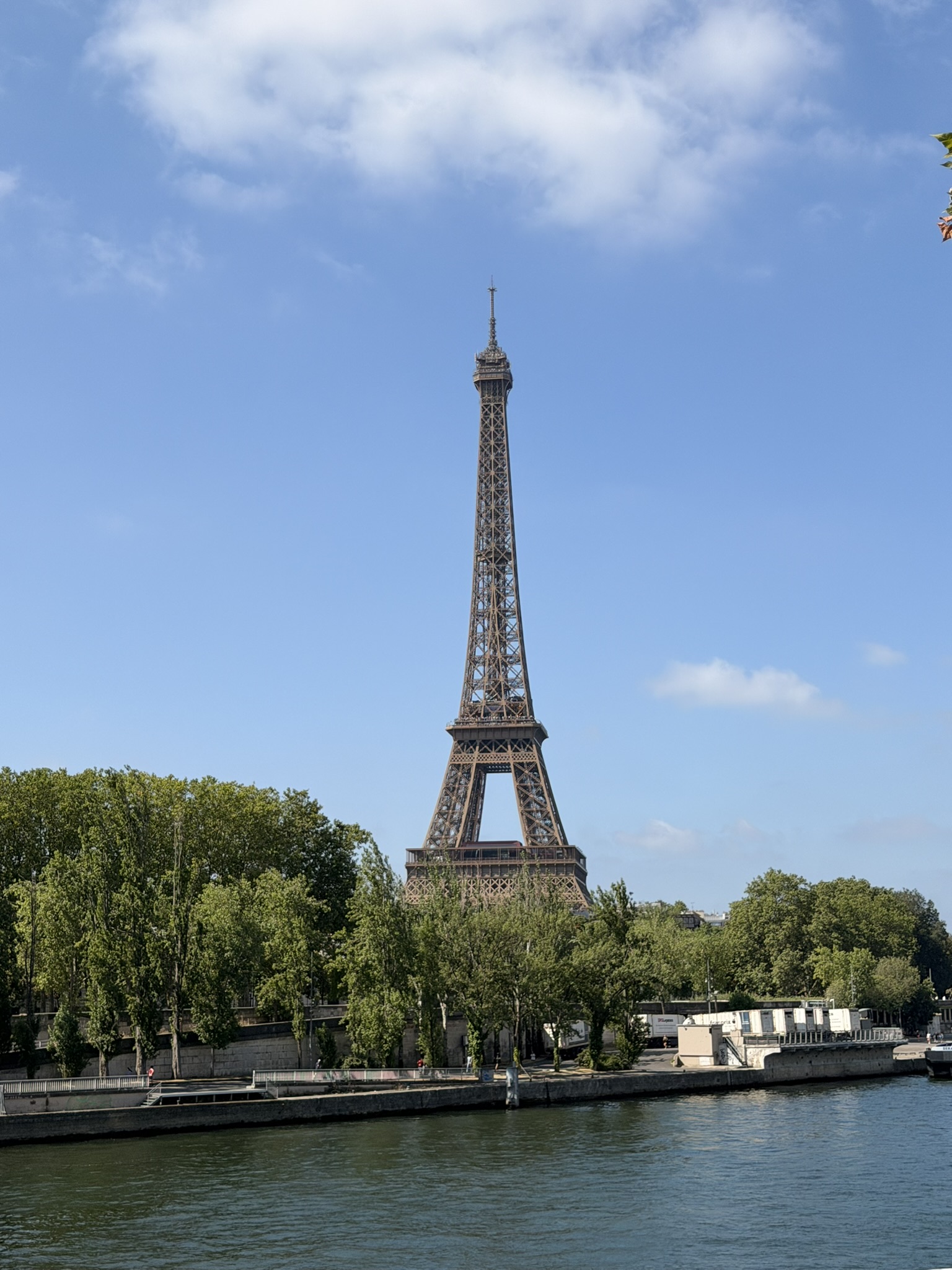
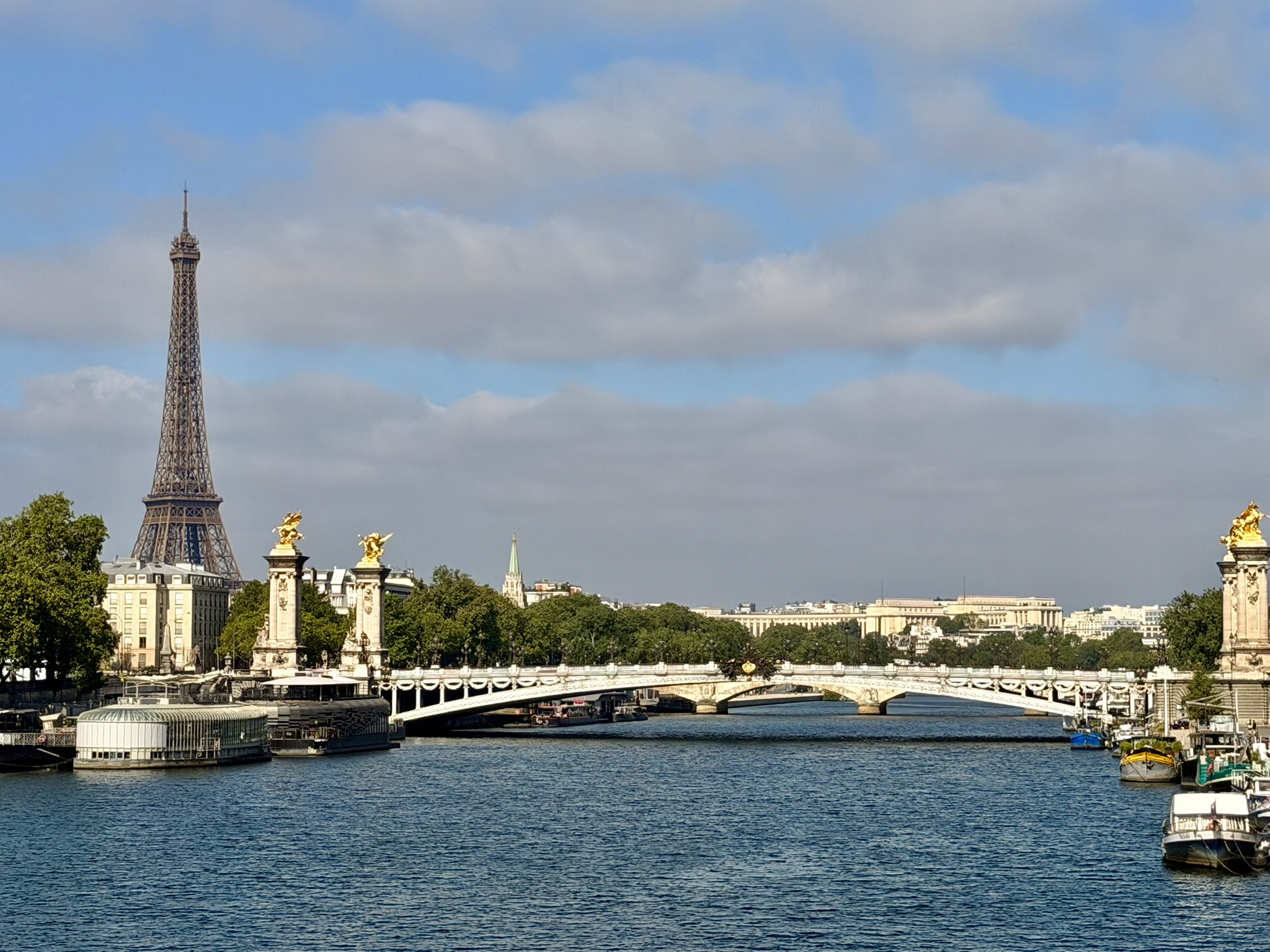
By Sunday, Benjamin had joined the wider group of Whitehouse students travelling to Paris for an introductory photography session, exploring how to capture Paris and the people moving through it. A walk along the Seine took in the Eiffel Tower and Musée d’Orsay, but by Monday morning the pace of the trip was about to change considerably.
Couture Week had begun!
From Schiaparelli to Iris van Herpen
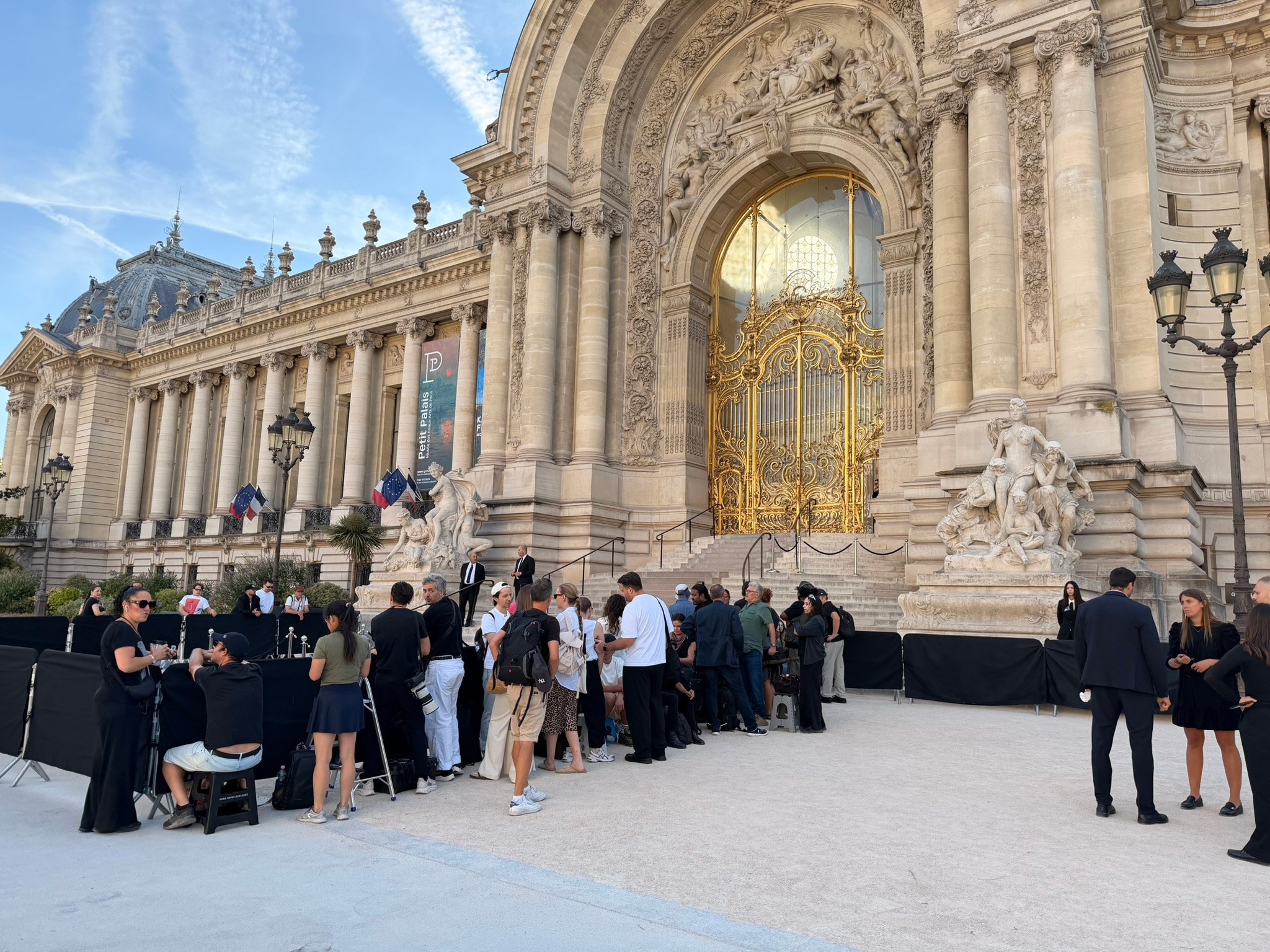
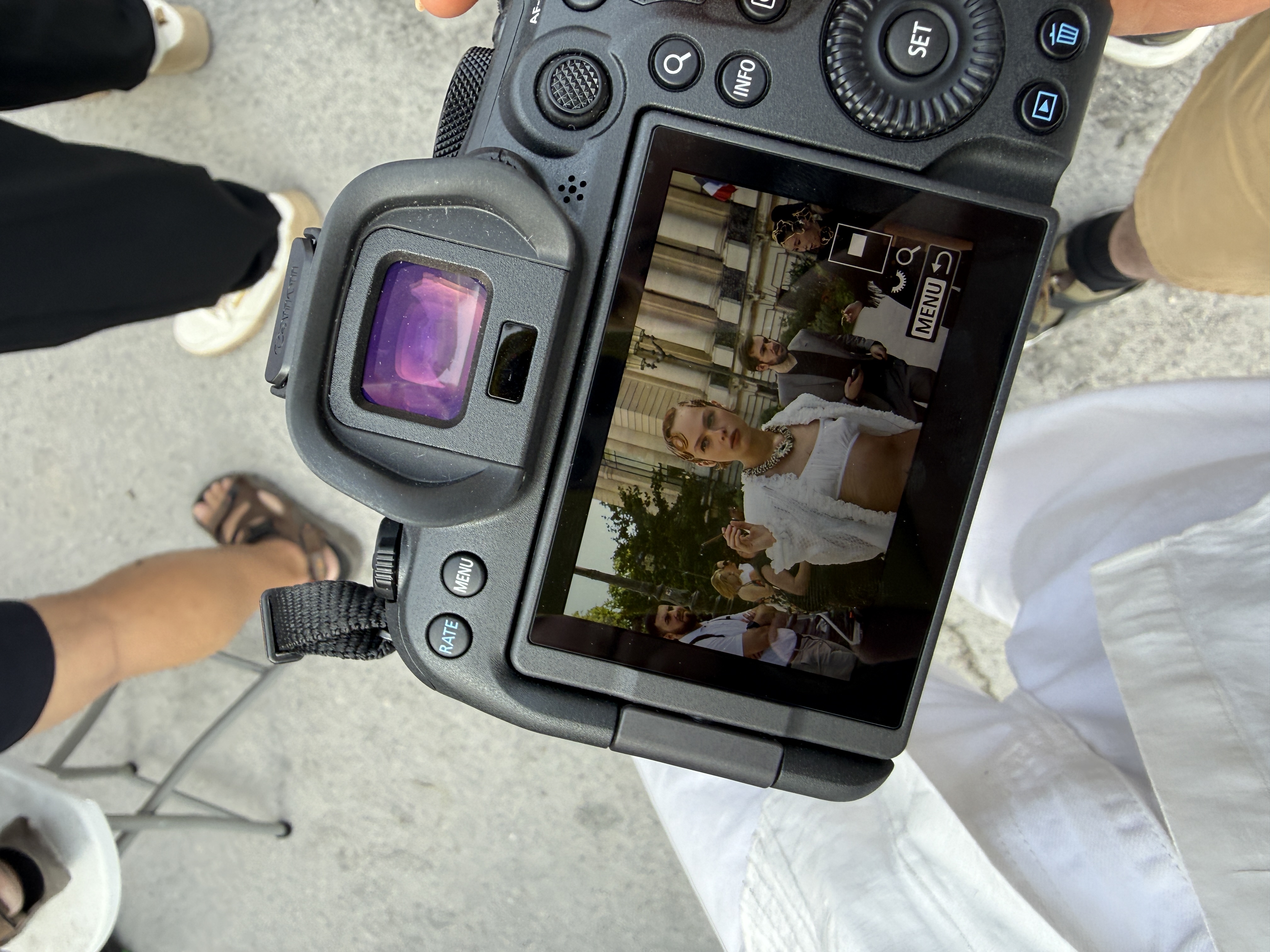
Outside Schiaparelli, Benjamin joined the photographers, editors, stylists and fashion obsessives gathering around one of Couture Week’s most anticipated shows.The assignment was street-style photography.
It offered a different kind of lesson in fashion communication: watching how clothing is actually worn, styled, photographed and performed beyond the controlled environment of a runway.
From there, Benjamin crossed Paris by Métro to see Iris van Herpen present inside an old theatre, before travelling to the gardens of the Musée Rodin for Dior, where a black lacquered stage had transformed the historic setting.
Experiencing the ecosystem surrounding the shows revealed something entirely different from seeing the finished runway imagery online. Couture Week didn’t simply exist inside its venues. It spilled onto pavements, Métro platforms, cafés and streets across Paris.
For Benjamin, watching how Parisians dressed became part of the education itself.
As a designer, the experience prompted him to think about something that can sometimes get lost during the creative process: practicality.
Fashion can be fantastical and experimental, but ultimately clothes are made to interact with bodies and lives. On the streets of Paris, Benjamin could see how people translated fashion into everyday life, balancing individual expression with clothing that could actually be lived in.
Couture, up close
Tuesday began with Chanel, where Benjamin spotted figures including Baz Luhrmann and Anna Wintour among the arrivals, followed by Germanier and Armani Privé.
Wednesday brought Balenciaga, staged at a university, followed by Robert Wun, where Cardi B was among the guests, then Viktor & Rolf and Jean Paul Gaultier.
Moving across Paris from one presentation to another became its own crash course in the pace and scale of the international fashion industry.
It was also an experience that couldn’t simply be booked online.
Access and even knowledge of many events relied on industry contacts and relationships, offering Benjamin a rare glimpse into a part of the fashion world usually experienced from the outside.
Thursday brought Celia Kritharioti near Place Vendôme before Benjamin moved from contemporary couture into fashion history with a visit to La Galerie Dior.
For Benjamin, Dior and the work of John Galliano became particular highlights of the trip.
Seeing those garments in person also revealed something easily lost when fashion is experienced digitally: the presence of the person who made them.
Looking closely at a Dior garment dating back to the 1960s, Benjamin could see the hand stitching still visible in its construction.
The garment was no longer simply an image, reference or historical artefact. There was evidence of a human hand within it.
For someone studying Fashion Design and learning the processes behind constructing garments himself, that detail carried particular weight.
“To see couture, to see it in real life... you can see the human element in the garment.”
Behind the doors of Paris fashion
Some of Benjamin’s most memorable experiences happened away from the runway.
Thanks in part to photographer and creative director Elli Ioannou and her industry connections, alongside Whitehouse’s dedicated staff members, Benjamin was able to experience parts of Paris’ fashion landscape rarely accessible to the public.
A private viewing at Hermès offered another perspective on the relationship between craftsmanship, luxury and retail.
Then on Friday, Benjamin headed to Avenue Montaigne where Whitehouse students were lucky to experience a private tour of the highly exclusive Fendi boutique and apartment.
Later that afternoon, the focus shifted from finished garments to one of fashion’s oldest materials.
A meeting with The Woolmark Company inside an old industrial building gave Benjamin an opportunity to learn more about the properties and versatility of wool and the possibilities of manipulating a single natural fibre across vastly different applications.
It was another reminder that fashion doesn’t begin with a runway.
Behind every collection is an enormous network of textile producers, craftspeople, designers, stylists, photographers, communicators and creative collaborators.
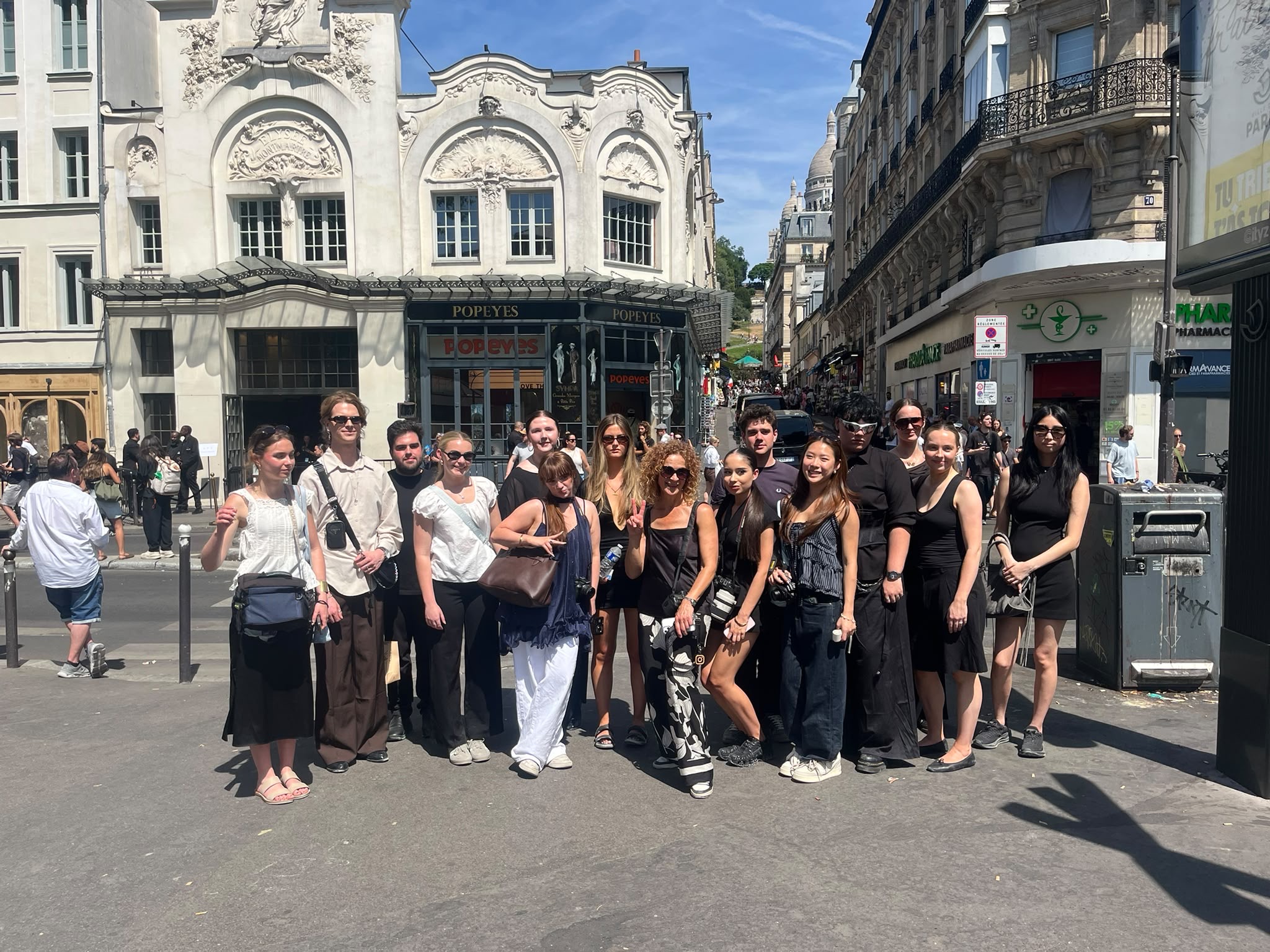
Walking through fashion history
By Saturday, Benjamin’s time in Paris was nearing its end.
There was still time for visits to the Fondation Azzedine Alaïa and Musée de l’Orangerie before beginning the journey home via Dubai.
But perhaps one of the most valuable parts of his Paris experience was impossible to schedule. It was simply walking the streets, seeing how Parisians dressed and watching couture leave the controlled environment of a runway and influence what appeared outside it.
Fashion can sometimes appear impossibly polished from a distance. This trip offered Benjamin the opportunity to look closer and find the human element underneath. Most importantly, the experience reinforced his understanding of fashion as creative expression.
Not simply something that exists on a runway, behind museum glass or on a screen, but something made by people, worn by people and shaped by the places and cultures surrounding them.
There are lessons you learn at a desk, and others you learn in a studio.
And then there are the ones you can only learn by walking the streets of Paris.
------
Learn more about studying at Whitehouse: